Romance Scams and Cryptocurrency: How 'Pig Butchering' Schemes Steal Billions
Understand crypto romance scams (pig butchering) where fraudsters build fake relationships to steal cryptocurrency. Learn the warning signs and how to report them.
What Are Crypto Romance Scams?
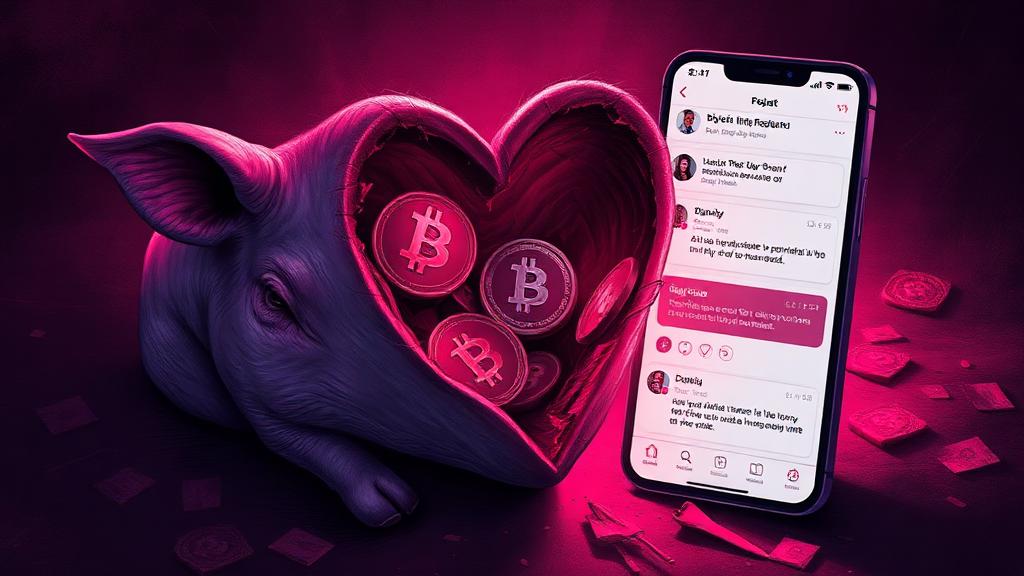
Crypto romance scams — also known as "pig butchering" (sha zhu pan) — are frauds in which a stranger spends weeks or months building a romantic or close friendship with the victim on a dating app or social platform, then steers them onto a fake cryptocurrency investment site that displays fabricated profits and will not pay out. The relationship is only the delivery mechanism; the theft happens when the victim is persuaded to send cryptocurrency to wallets the scammer controls.
The name comes from "fattening the pig before slaughter": the grooming phase builds trust and the "slaughter" is the point at which every deposit the victim has made is taken. Because the victim sends the funds voluntarily, the transfers are valid on-chain and recovery is rare.
Key Facts
- Confidence and romance fraud reported to the FBI cost victims $929,287,469 in 2025, up from $672,009,052 in 2024 and $652,544,805 in 2023. Source: FBI Internet Crime Complaint Center, 2025 Internet Crime Report.
- Cryptocurrency investment fraud — the payload these relationships are built to deliver — "was the highest source of financial losses to Americans in 2025 with $7.2 billion reported in losses", across 61,559 complaints, a 48% increase in complaints over 2024. Source: FBI IC3, 2025 Internet Crime Report.
- Nearly 60% of people who reported losing money to a romance scam in 2025 said it started on a social media platform, and reported losses to scams that began on social media reached $2.1 billion in 2025. Source: FTC Consumer Protection Data Spotlight, April 2026.
- The FBI states these scams "are largely perpetrated by organized criminal enterprises based in Southeast Asia using victims of human trafficking as forced labor to run the scam operations." Source: FBI IC3, 2025 Internet Crime Report.
How Does a Crypto Romance Scam Unfold?
The process typically spans weeks or months: initial contact via dating apps or social media, building an emotional connection through daily communication, gradually introducing crypto "investment opportunities," directing victims to a fake trading platform showing false profits, encouraging increasingly larger deposits, and finally blocking the victim when they try to withdraw or stop investing.
The FBI describes the same sequence from the offender's side: contact is initiated "through text messages, social media sites, advertisements, or dating applications" and moved quickly to a messaging platform, victims "are enticed to send cryptocurrency to fake investment scam platforms or apps and are shown fake profits and offered loans to encourage larger investments," and when they try to withdraw "they will be charged taxes and fees as a final attempt to exploit money from the victims before the scammers disappear with all the victim funds" (FBI IC3, 2025 Internet Crime Report).
How Much Money Do Crypto Romance Scams Steal?
In 2025 the FBI's Internet Crime Complaint Center recorded $929,287,469 in reported losses to confidence and romance fraud, a rise of roughly 38% on the $672,009,052 reported in 2024. That figure counts only the relationship category; when the same manipulation is logged under its investment payload, cryptocurrency investment fraud accounted for $7.228 billion across 61,559 complaints in 2025 and was the single largest source of reported financial loss to Americans that year. Because reporting is voluntary and many victims never come forward, all of these figures are floors rather than totals. Victims span all demographics, including financially sophisticated individuals.
What Are the Warning Signs of a Crypto Romance Scam?
- Someone you've never met in person suggests crypto investments
- They claim to have a "special method" or insider knowledge
- The platform they recommend isn't well-known or regulated
- You see profits on screen but can't withdraw them
- They discourage you from telling friends or family
- They create urgency around "limited-time" opportunities
- A withdrawal is refused until you first pay a "tax," "fee" or "deposit" — the FBI records this as the final stage of the scam
The decisive test is the withdrawal. A balance shown on a website is a number the operator controls; only a completed withdrawal to a wallet or bank account you control proves anything. Try a small one early, before any further deposit.
What Should You Do If You're a Victim?
It's not your fault — these scams are run by sophisticated criminal organizations. Report to the FBI's IC3 at ic3.gov, your local police, and the FTC at reportfraud.ftc.gov. Document all communications and transaction details. Seek support from organizations that help fraud victims. Be wary of "recovery services" that may be secondary scams — the FBI notes that victims "are also targeted in recovery scams, claiming to help recover lost funds."
Frequently Asked Questions
What is a crypto romance scam?
A crypto romance scam, or "pig butchering," is a fraud in which a stranger builds a romantic or close friendship with the victim over weeks or months on a dating app or social platform, then steers them onto a fake cryptocurrency investment site that shows fabricated profits and will not pay out. The relationship is the delivery mechanism; the theft happens when the victim sends cryptocurrency to wallets the scammer controls.
How much money do crypto romance scams steal?
The FBI's Internet Crime Complaint Center recorded $929,287,469 in reported losses to confidence and romance fraud in 2025, up from $672,009,052 in 2024. Cryptocurrency investment fraud, the payload most of these relationships are built to deliver, accounted for $7.228 billion across 61,559 complaints in 2025 and was the largest single source of reported financial loss to Americans that year.
Where do crypto romance scams come from?
The FBI states that cryptocurrency investment scams "are largely perpetrated by organized criminal enterprises based in Southeast Asia using victims of human trafficking as forced labor to run the scam operations." Contact is usually initiated through text messages, social media, advertisements or dating applications and then moved to a private messaging platform.
How can you tell whether a crypto investment suggested by an online partner is fake?
Attempt a small withdrawal before depositing anything further. A profit figure shown on a trading dashboard is a number the operator controls and proves nothing; only funds that arrive in a wallet or bank account you control are real. If the withdrawal is refused, or is allowed only after you pay a "tax," "fee" or further deposit, the platform is fraudulent.
Can you get your money back from a crypto romance scam?
Recovery is rare, because the victim authorises the transfers themselves and the funds are usually moved and laundered quickly. Report the fraud immediately to the FBI's IC3 at ic3.gov and to the FTC at reportfraud.ftc.gov, and keep every transaction hash, wallet address and message. Treat any service that contacts you offering to recover the funds for an up-front fee as a second scam; the FBI records recovery scams as a known follow-on attack against these victims.
บทความที่เกี่ยวข้องและคำเตือน
The Exit Risk: What Happens to Howell's Partners When They Want Their Money Back
Adam Howell's New Dubai Website: Soliciting Investors Again
Unmasking Adam Howell: Serial Scammer & Crypto Fraudster
How to Identify Crypto Rug Pulls Before You Lose Everything
Pump and Dump Schemes in Cryptocurrency: How They Work and How to Avoid Them
NFT Scams: 10 Red Flags Every Collector Must Know in 2026
ความคิดเห็น (0)
ยังไม่มีความคิดเห็น เป็นคนแรกที่แบ่งปันความคิดของคุณ
แสดงความคิดเห็น
0/2000
ความคิดเห็นทั้งหมดจะถูกตรวจสอบก่อนเผยแพร่